The waves
Surfing in Cambutal
An exposed Pacific coast, consistent swell, and lineups you'll often have to yourself.
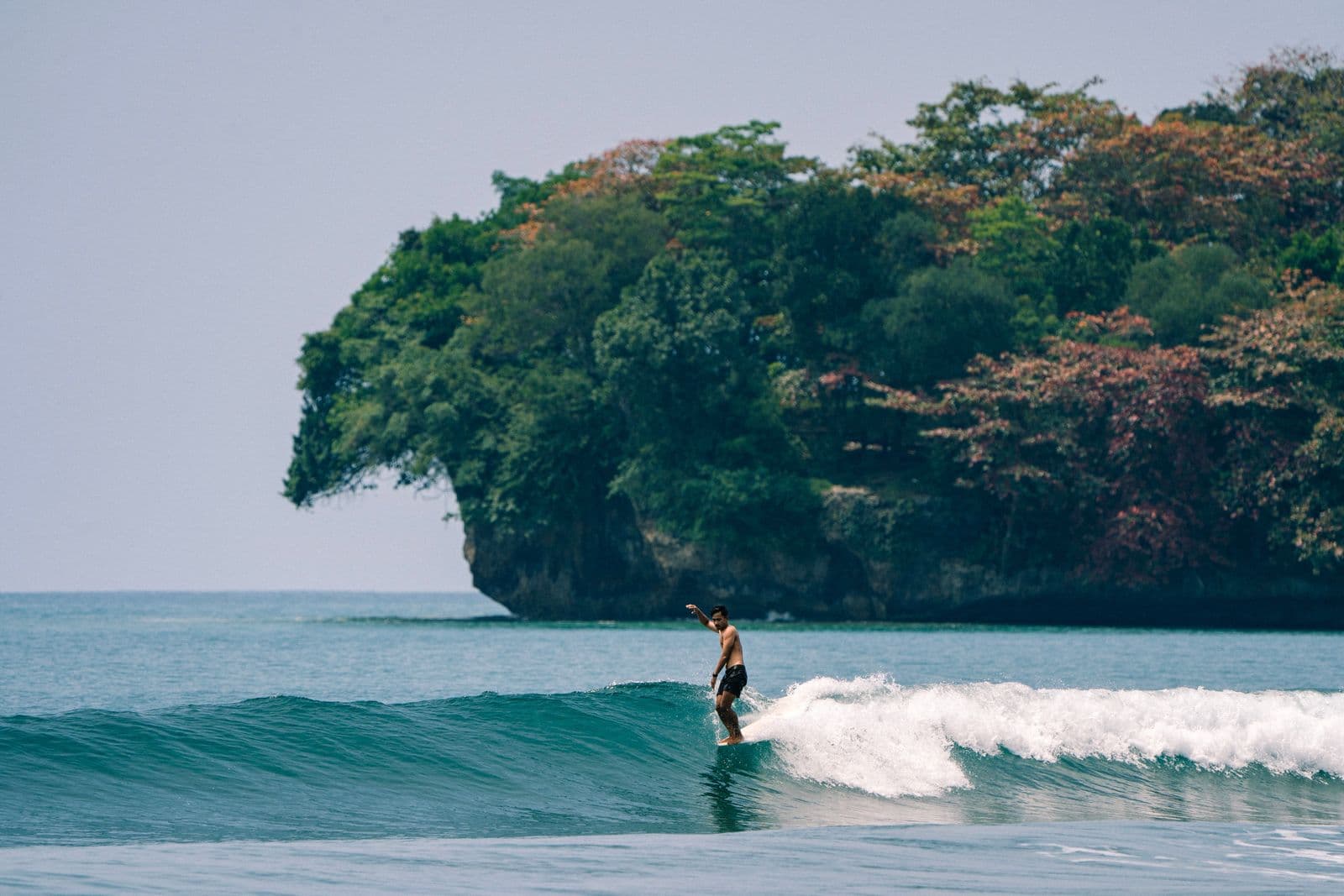
Cambutal faces open ocean on the exposed south coast of the Azuero Peninsula, so it picks up swell for most of the year. The beach break in front of town is the heart of it — a forgiving, sandy-bottomed wave that's ideal for learning, yet has enough punch on a bigger swell to keep experienced surfers happy.
What sets Cambutal apart isn't a single perfect wave; it's the emptiness. On most days you'll share the water with a handful of people, and often no one at all. That, more than anything, is why surfers come — and why so many end up staying longer than they planned.
- Season
- Year-round, best Apr–Oct
- The wave
- Sandy beach break
- Level
- All levels
- Crowds
- Refreshingly empty
The main beach break
Cambutal's surf centres on the beach break in front of town — a sandy-bottomed wave with multiple peaks that shift with the sandbars through the season. On a small day it's mellow, rolling whitewater that's perfect for learning; when the swell fills in, it steepens into punchy lefts and rights with real push.
It's an easy paddle-out, rarely crowded, and works across the tides, so it's the kind of spot you can happily surf all day. Boards and lessons are easy to arrange in town, which makes it a genuinely good place to learn — or to log a lot of waves without fighting for them.
When to surf
There's rideable surf in Cambutal essentially year-round, but the most consistent, larger swells arrive with the Southern Hemisphere season — roughly April through October. This overlaps with the green (rainy) season, when mornings are often clean and the afternoons bring passing showers.
The dry season (December–April) tends to be sunnier with lighter, more beginner-friendly surf and the easiest road conditions. Whatever month you come, dawn patrol is rewarded: winds are usually lightest and the water emptiest first thing.
What to bring
- Bring or rent a board to suit beach-break conditions — a forgiving funboard or longboard for learners, a shortboard for steeper days.
- Reef-safe sunscreen, a rash guard and plenty of water — the equatorial sun is strong even on cloudy days.
- There's a well-stocked surf shop in town for boards, rentals, gear and even ding repair — so you don't need to carry it all, though it's worth packing any specialty gear you can't do without.
Heads up — Conditions vary with swell, tide and wind — check a current forecast and ask locally before paddling out at unfamiliar spots.